Why Choose the Right Photovoltaic Inverter?

Time:2026-11-01 Author:Madeline
0%

Choosing a Photovoltaic Inverter is not a minor equipment decision. It affects how much energy a solar array delivers, how reliably it operates, and how well it responds to changing grid conditions. The International Energy Agency’s Renewables 2024 report estimates that solar PV added about 420 gigawatts of capacity worldwide in 2023. That rapid growth makes careful component selection more important—not less.

An inverter converts a panel’s direct-current output into usable alternating current. It also manages operating limits, monitors performance, and may provide grid-support functions. NREL power-electronics researcher David Narang’s work on inverter grid functionality points to a practical takeaway; in plain-language paraphrase: “Choose for grid behavior, not conversion efficiency alone.” Buyers should compare efficiency alongside array sizing, maximum-power-point tracking, temperature range, monitoring tools, warranty terms, and access to technical support. A high-efficiency label alone cannot tell you how the unit will perform on a hot roof or during partial shading.

Details matter. A poorly matched inverter can constrain output, while an undersized model may clip power during bright midday hours. Hybrid systems add another layer: battery compatibility and control settings must fit the household’s actual needs. Check product specifications and consult a qualified installer; site conditions change the answer. Even strong equipment can disappoint when poorly configured. That is worth remembering. A sensible choice balances performance, serviceability, and long-term reliability—not just the lowest purchase price.
Why Choose the Right Photovoltaic Inverter?

What a Photovoltaic Inverter Does in a Solar Power System

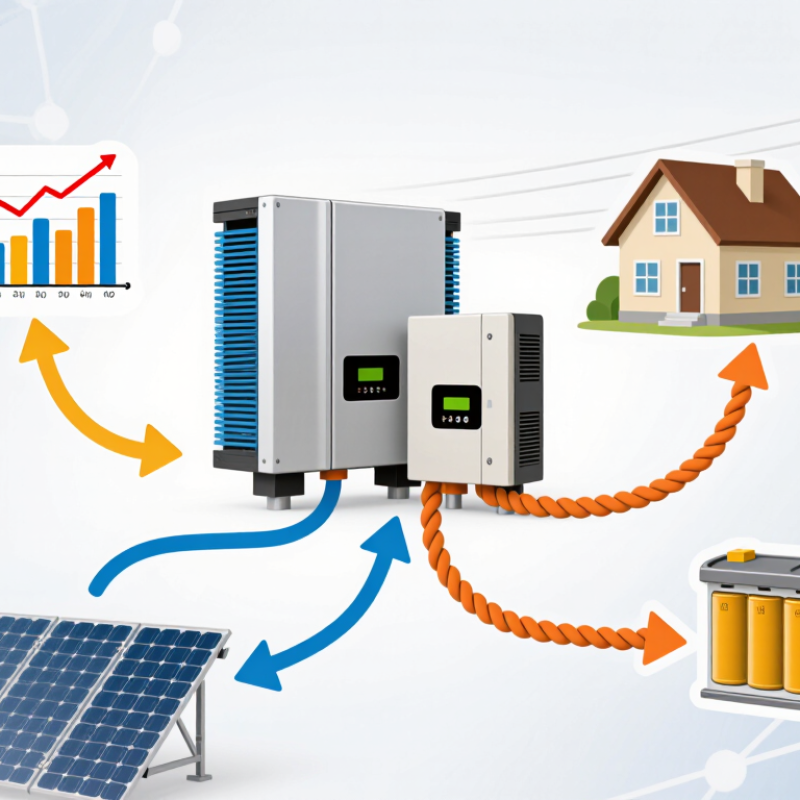
A photovoltaic inverter converts the direct current produced by solar panels into alternating current used by household appliances and the electrical grid. It also tracks maximum power point, adjusting the panels’ operating voltage as sunlight changes. When a cloud crosses the roof, that adjustment helps the system capture available energy.

NREL’s PVWatts documentation uses 96% as a default inverter-efficiency assumption in its modeling. That figure is a planning reference, not a promise of real-world performance. Actual output also depends on temperature, shading, wiring, and how well the inverter matches the array. A sunny afternoon can still bring reduced output if the inverter reaches its power limit. Small details matter.

Inverters also monitor electrical conditions and can stop conversion when an abnormal condition is detected. Their data can help reveal production changes, though readings alone may not explain the cause. Heat matters, too. A unit installed in a hot, poorly ventilated spot may face tougher operating conditions than one kept cool. I would not choose an inverter by efficiency alone; capacity, operating environment, monitoring, and compatibility with storage all deserve attention. The right choice depends on the whole system, not one impressive number.

How String, Central, and Microinverters Differ by System Scale

Why Choose the Right Photovoltaic Inverter?

How String, Central, and Microinverters Differ by System Scale

On a small rooftop, a string inverter gathers power from several connected panel strings. It is often a practical fit when roof faces receive similar sunlight. But shade on one panel can limit its string’s output. Microinverters sit behind individual panels, helping panels operate more independently. Shade matters here. They can also make panel-level monitoring easier, though more units mean more rooftop electronics to maintain.

For large, uniform solar fields, central inverters convert power from many strings at a shared location. This can simplify equipment layout and service access. Large commercial sites may instead use multiple string inverters, giving operators more separate sections to monitor. The best fit depends on wiring, shade, access, and repair plans. Scale isn’t destiny.

Cost data helps explain why designs vary. NREL’s 2023 U.S. Solar Photovoltaic System and Energy Storage Cost Benchmark estimated residential PV at $2.90 per watt DC and utility-scale fixed-tilt PV at about $1.11 per watt DC. These are whole-system benchmarks, not inverter prices. IEA PVPS reported roughly 447 GW of new solar capacity worldwide in 2023, across systems with very different layouts. A tidy rule can mislead: larger projects often favor centralized equipment, but site conditions may point elsewhere.

How Inverter Efficiency Above 98% Affects Energy Conversion

A photovoltaic inverter rated above 98% converts more of a panel array’s direct-current output into usable alternating-current electricity. The difference is measurable. From 10 kilowatt-hours of DC input, a 98%-efficient inverter delivers about 9.8 kilowatt-hours of AC power; at 96%, it delivers about 9.6. That 0.2-kilowatt-hour gap can accumulate over years of daily operation. NREL’s PVWatts Version 8 documentation uses 96% as its default inverter-efficiency assumption, offering a useful modeling reference—not a guarantee of real-world performance.

A high peak rating matters most when the inverter operates near its optimal load and temperature. Heat, shading, wiring losses, and partial-load conditions can lower actual conversion efficiency. A label can mislead. Check whether the quoted figure is peak efficiency or a weighted rating, and compare test conditions before estimating annual energy gains. Small differences matter. For a home producing 10 megawatt-hours of DC energy yearly, a two-percentage-point increase would mean roughly 200 additional kilowatt-hours before other system losses. The estimate is simple, perhaps too simple: site measurements and operating conditions still deserve attention.

Why PV Systems Commonly Use a 1.2–1.3 DC-to-AC Ratio

Why Choose the Right Photovoltaic Inverter?
Why PV Systems Commonly Use a 1.2–1.3 DC-to-AC Ratio

A PV array’s DC rating describes its modules under standard test conditions. An inverter’s AC rating limits the power delivered to the building or grid. Designers often size the array at 1.2 to 1.3 times the inverter rating. This provides more DC power during cool mornings, cloudy periods, and less-than-ideal sun angles. It can increase annual energy production without requiring a larger inverter. On very bright days, output may exceed the inverter’s AC limit. This is called clipping. Some clipping can be acceptable when added energy across the year outweighs occasional peak losses. The ratio is common, not universal.

Tips: Check hourly production simulations, not just peak ratings. Include roof direction, tilt, shade, local temperatures, and export limits. A south-facing array in a cool climate may behave differently from an east-west roof in a hot area. Ask the installer to explain expected clipping and annual yield. The spreadsheet may look neat. Real roofs are messier.

Choosing the ratio means balancing inverter cost, energy yield, and system constraints. A 1.3 ratio is not automatically better than 1.2. If modules are shaded or export is restricted, extra DC capacity may bring less value. Conversely, too little DC capacity can leave the inverter underused for much of the day. Review the assumptions carefully, especially if the roof layout changes.

How IEEE 1547-2018 Grid Requirements Shape Inverter Selection

Why Choose the Right Photovoltaic Inverter?
How IEEE 1547-2018 Grid Requirements Shape Inverter Selection

A photovoltaic inverter does more than convert sunlight into usable electricity. It must also interact safely and predictably with the grid. IEEE 1547-2018 sets interconnection requirements for distributed energy resources, including solar systems. It addresses voltage and frequency response, ride-through behavior, power quality, and communications. These capabilities can affect which inverter suits a particular project.

A grid disturbance may cause voltage to dip briefly. A compatible inverter may need to remain connected and respond according to configured requirements, rather than disconnect immediately. The standard also supports grid services, such as reactive power control. However, utilities determine applicable settings and approval processes. Requirements can vary by location, so a product’s listed capabilities alone do not confirm project compatibility. Small details matter.

Tips: Ask your installer how the inverter’s settings will match the local utility’s interconnection requirements. Check that the selected model supports required voltage and frequency functions, and confirm communications needs before installation. Keep the approved settings documented. I’ve seen specifications look clear on paper, yet one overlooked setting can delay approval. That deserves a second look.

FAQS

What does a 1.2–1.3 DC-to-AC ratio mean?

The PV array’s DC rating is 1.2 to 1.3 times the inverter’s AC rating. A 10 kW inverter might pair with 12–13 kW of modules.

Why size a PV array above the inverter’s rating?

Extra module capacity can produce more energy during cool mornings, cloudy periods, and less-than-ideal sun angles. It may increase annual production without requiring a larger inverter.

What is inverter clipping?

On very bright days, DC output may exceed the inverter’s AC limit. The inverter caps its output. That is clipping. Some clipping can be acceptable if annual energy gains outweigh occasional peak losses.

Is a 1.3 ratio always better than a 1.2 ratio?

No. Shading or export limits can reduce the value of extra modules. Too little DC capacity can also leave an inverter underused. The right balance depends on the site.

Which site details affect the best ratio?

Roof direction, tilt, shade, local temperatures, and export limits all matter. A cool, south-facing roof may behave differently from a hot, east-west roof.

How can I estimate clipping and annual production?

Review hourly production simulations, not just peak ratings. Ask which assumptions were used. A spreadsheet may look neat, but real roofs are messier.

What grid requirements can affect inverter selection?

IEEE 1547-2018 covers areas such as voltage and frequency response, ride-through behavior, power quality, and communications. Local utility settings and approval processes also matter.

What should I confirm with the installer?

Check that the inverter supports required grid functions and communications. Ask how its settings will match local utility requirements, and keep approved settings documented. Small details matter.

Conclusion

A Photovoltaic Inverter converts the direct current produced by solar panels into alternating current that can be used by a building or supplied to the electrical grid. Choosing the right type depends in part on system size and layout: string inverters serve groups of panels, central inverters are suited to large installations, and microinverters operate at individual panels. Each approach offers different trade-offs in monitoring, design flexibility, and system management.

Efficiency and system sizing also matter. An inverter rated above 98% efficiency can reduce conversion losses, while a DC-to-AC ratio of about 1.2–1.3 can help make effective use of inverter capacity as panel output varies. Finally, grid-connected systems must be compatible with applicable interconnection requirements, including IEEE 1547-2018. Considering these factors together helps ensure an inverter is a good fit for the solar system’s expected output, operating conditions, and grid connection.

Madeline

Madeline

Madeline is a dedicated marketing professional with a wealth of expertise in our company's core offerings. With a keen understanding of the industry, she brings a unique perspective to her role, consistently delivering high-quality content that highlights the superior aspects of our products. As......