What Are the 2026 Top DC Voltage Regulators?

Time:2026-10-21 Author:Oliver
0%

Choosing the 2026 top DC Voltage Regulator requires more than comparing catalog prices or headline efficiency figures. Engineers must examine input range, output stability, transient response, thermal behavior, protection features, and long-term availability. A regulator operating inside a factory cabinet faces different demands from one powering a battery-driven sensor. Heat tells part of the story. So does noise.

Dr. John G. Kassakian, a respected power-electronics researcher, described the field clearly: “Power electronics is the application of solid-state electronics for the control and conversion of electric power.” That principle remains useful when evaluating modern DC Voltage Regulator designs. The best device is not always the smallest or most efficient. It must match the load, source, enclosure, and operating environment. A compact buck regulator may perform beautifully at room temperature, then lose efficiency near its thermal limit. That detail is easy to overlook.

This guide compares leading regulator solutions expected to matter in 2026. It considers linear, switching, synchronous, automotive, industrial, and low-power architectures. Measurements, datasheet evidence, manufacturer reliability, and practical design experience shape the discussion. Some conclusions remain provisional because product revisions, supply conditions, and testing methods can change. No ranking is flawless.

Readers should also question impressive specifications. A low-noise figure may depend on carefully selected capacitors and layout. A high-current rating may require aggressive cooling. Real performance lives on the circuit board.
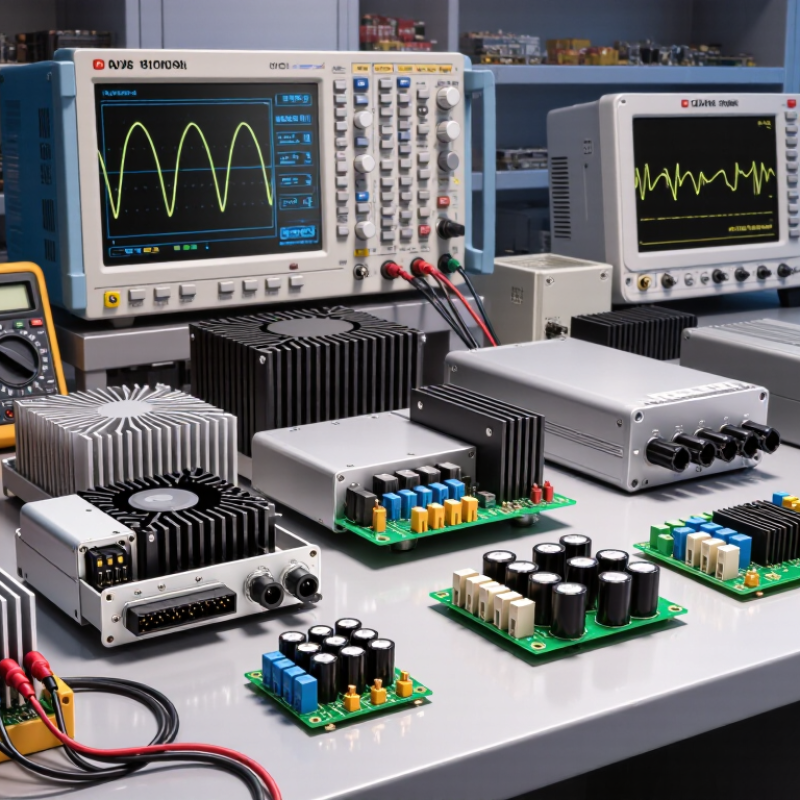
What Are the 2026 Top DC Voltage Regulators?

What Are DC Voltage Regulators and How Do They Work?

In 2026, top DC voltage regulators are judged by more than output voltage. They must deliver stable power while handling heat, noise, and sudden load changes. A DC regulator converts an uneven input into a controlled output for circuits, sensors, motors, and communication equipment. It monitors voltage through a feedback loop, then adjusts switching time or resistance to correct errors. The process is continuous.

A switching regulator stores energy in an inductor and releases it in measured pulses. A capacitor smooths those pulses before they reach the load. Buck circuits reduce voltage, while boost circuits increase it. Buck-boost designs can perform both tasks when the input varies widely. Linear regulators work differently by dissipating extra voltage as heat. They are quiet and simple, but efficiency falls sharply when the voltage difference is large.

Real selection requires more than reading a data sheet. Check input range, output accuracy, load current, ripple, startup behavior, and thermal limits. A circuit drawing 2 amperes at 5 volts may still need airflow if its input voltage is much higher. Measure the regulator under changing loads, not only at room-temperature idle. No design is perfect. Even a highly efficient converter can create electromagnetic noise if its layout is careless. Short current paths, suitable capacitors, and proper grounding often matter as much as the regulator itself. My cautious view is simple: “top” depends on the application, and laboratory numbers can disappoint in a crowded enclosure.

What Are the 2026 Top DC Voltage Regulators?

DC voltage regulators maintain a stable output voltage when the input voltage or load changes. The chart compares representative efficiency ranges for widely used regulator types in practical designs at moderate load. Actual performance depends on voltage ratio, current, switching frequency, thermal conditions, and component selection.

How they work: Linear regulators reduce voltage by dissipating the excess energy as heat, making them simple and low-noise but often less efficient. Switching regulators rapidly control a transistor and use inductors, capacitors, and feedback to transfer energy efficiently. Buck regulators step voltage down, boost regulators step voltage up, and buck-boost regulators can perform both functions. Charge-pump regulators use switched capacitors and can provide compact, inductor-free conversion for suitable current levels.

Data shown as representative engineering ranges, not guaranteed specifications.

Which Types of DC Voltage Regulators Are Available in 2026?

In 2026, DC voltage regulators are available in several practical forms. Linear regulators remain useful when circuits need low noise and simple control. They convert excess voltage into heat, so a warm enclosure can reveal poor efficiency. Low-dropout regulators suit battery systems with small input-output differences. They are quiet, but their limited current and thermal capacity need careful checking.

Switching regulators serve higher-power applications. Buck converters reduce voltage efficiently, while boost converters raise it for displays, sensors, and portable equipment. Buck-boost regulators handle input levels above or below the required output. That flexibility helps battery-powered devices as voltage changes during discharge. However, switching circuits can create ripple and electromagnetic interference. Layout, shielding, and filtering matter as much as the regulator rating.

Charge-pump regulators use capacitors instead of inductors. They fit compact, low-current designs, although their output capability is modest. Isolated DC regulators provide electrical separation through transformer-based switching. They support sensitive measurement circuits and systems with different ground references. Digitally programmable regulators allow firmware-based voltage adjustment and monitoring.

This feature improves testing, but software faults can create unexpected output levels. Protection functions should include current limiting, thermal shutdown, and undervoltage lockout. I have seen designs focus heavily on efficiency while ignoring heat paths. That trade-off deserves more attention.

No type wins every design.

What Features Define the Top DC Voltage Regulators of 2026?

The top DC voltage regulators of 2026 will be judged by measurable performance, not packaging. Engineers will expect high conversion efficiency, low standby current, and fast transient response when processors suddenly increase demand. The IEA’s Electricity 2024 report estimates that data centers, artificial intelligence, and cryptocurrency facilities used about 460 TWh globally in 2022. Demand could exceed 1,000 TWh by 2026. Efficient regulation is no longer a minor design choice.

Thermal behavior will matter just as much. A strong regulator should maintain stable output near its rated load, while monitoring temperature, current, and input changes. Digital telemetry can reveal a 20-millivolt dip before it damages sensitive equipment. Short-circuit protection, overvoltage protection, soft-start control, and low electromagnetic interference should also be standard features. The Lawrence Berkeley National Laboratory’s 2024 data center report projects that U.S. data centers may consume 6.7% to 12% of national electricity by 2028. That pressure favors regulators with low losses and practical cooling requirements. Still, efficiency figures can mislead when measured at only one load point.

Tips: Compare efficiency across light, typical, and peak loads. Check the thermal derating curve, switching frequency, ripple voltage, and protection response time. Leave room for airflow. A smaller regulator is not automatically better. In field testing, connector resistance and PCB layout often change results. That detail is easy to overlook.

How Do the Leading 2026 DC Voltage Regulators Compare?

Comparing the leading 2026 DC voltage regulators requires more than reading efficiency figures. A 12-volt to 5-volt converter may claim 96% efficiency, yet lose performance near its thermal limit. Laboratory checks should measure output ripple, load response, standby current, and heat at several input voltages. A steady oscilloscope trace matters more than a polished specification sheet.

Synchronous buck regulators usually deliver strong efficiency for processors, displays, and battery-powered equipment. They can respond quickly when a load jumps from 0.5 to 4 amperes. Linear regulators remain quieter, but their wasted voltage becomes heat. That difference is visible on a small circuit board. A three-volt drop at two amperes creates six watts of heat. Not trivial.

Protection features separate dependable 2026 designs from merely capable ones. Look for current limiting, thermal shutdown, reverse-polarity protection, and controlled startup. Digital regulation can improve monitoring, though it may add software complexity and another failure point. Packaging also deserves attention. A compact surface-mount device may save space but require copper area beneath it for cooling. No regulator wins every test. Engineers should verify ripple with suitable probes and test the final enclosure, not only the evaluation board. My own preference changes with the application. Quiet output sometimes matters more than maximum efficiency.

What Are the 2026 Top DC Voltage Regulators? - How Do the Leading 2026 DC Voltage Regulators Compare?

Comparison of representative regulator profiles commonly selected for 2026 power-design requirements

Regulator Profile Conversion Type Typical Input Voltage Typical Output Voltage Typical Output Current Peak Efficiency Voltage Accuracy Key Strength Main Limitation Typical Applications
Profile A: Low-Noise LDO Linear step-down 1.8–6.0 V DC 0.8–5.0 V DC Up to 1.5 A Up to 95%
Load-dependent
Typically ±1% to ±2% Very low output noise; fast transient response; simple layout Efficiency decreases as the voltage drop and load current increase; heat dissipation can be significant RF circuits, audio systems, sensors, precision analog rails, post-regulation
Profile B: Synchronous Buck Switching step-down 4.5–36 V DC 0.8–24 V DC Up to 10 A Up to 97% Typically ±0.5% to ±1.5% High efficiency and current capability; suitable for battery and industrial rails Requires an inductor, switching-layout control, and electromagnetic-interference management Embedded processors, industrial controls, telecommunications, automotive electronics
Profile C: High-Voltage Buck Switching step-down 9–60 V DC 3.3–48 V DC Up to 5 A Up to 96% Typically ±1% to ±2% Wide input range; handles surges and variable industrial supply rails Higher switching-node stress and greater EMI-filtering requirements than low-voltage designs Factory automation, vehicle systems, lighting, distributed power architectures
Profile D: Boost Converter Switching step-up 2.5–24 V DC 5–48 V DC Up to 4 A Up to 95% Typically ±1% to ±2% Raises a low supply voltage; useful when the output must exceed the input Input current can be high; output regulation is affected by minimum input voltage and load demand LED drivers, portable equipment, battery-powered systems, display backlights
Profile E: Buck-Boost Converter Switching step-up/step-down 2.5–36 V DC 1.8–36 V DC Up to 6 A Up to 95% Typically ±1% to ±2% Maintains regulation above and below the input voltage; ideal for changing battery voltage More components, control complexity, and switching noise than a basic buck or boost converter Battery systems, USB power, automotive electronics, mobile instruments
Profile F: Ultra-Low-Quiescent-Current Regulator Low-power buck or LDO 2.0–24 V DC 1.0–12 V DC Up to 1 A Up to 94% Typically ±1% to ±3% Very low standby consumption; supports long battery life and always-on loads Usually lower output-current capability and slower transient performance than higher-power designs Wearables, remote sensors, smart meters, IoT devices, sleep-mode electronics
Profile G: Automotive-Grade Regulator Protected switching buck or buck-boost 4–40 V DC operating range 3.3–16 V DC Up to 5 A Up to 95% Typically ±1% to ±2% Designed for electrical transients, temperature variation, and load-dump conditions Protection features and qualification requirements can increase cost, size, and design complexity Infotainment, driver assistance electronics, body control modules, vehicle sensors
Profile H: Isolated DC-DC Regulator Transformer-isolated switching conversion 9–36 V DC 5–24 V DC Up to 3 A Up to 92% Typically ±1% to ±3% Provides galvanic isolation; improves safety and ground-loop control Larger footprint, higher cost, and lower efficiency than comparable non-isolated converters Medical equipment, industrial interfaces, communications, gate-drive supplies

Note: Values are representative design ranges rather than specifications for a particular device. Actual performance depends on input and output conditions, switching frequency, thermal design, external components, layout, and protection settings.

How Can You Choose the Right DC Voltage Regulator for Your Needs?

Choosing the right DC voltage regulator in 2026 starts with the load, not the product ranking. A 24-volt industrial sensor may need a quiet 5-volt rail, while a battery system may require voltage conversion in both directions. Record input range, output voltage, load current, ripple limit, switching frequency, and ambient temperature. Small details matter.

Efficiency deserves serious attention. The International Energy Agency’s Energy and AI report estimates data-centre electricity demand could reach about 945 TWh by 2030, more than double 2024 levels. Efficient power conversion will therefore influence operating cost and thermal design. For high-current applications, a synchronous buck regulator often reduces conduction loss. For unstable battery voltage, a buck-boost design may offer safer regulation. An LDO remains useful when noise is critical, but its voltage drop becomes heat.

At 24 volts input, 5 volts output, and 2 amperes, it would dissipate 38 watts. That is not a minor issue.

Check transient response with the real load, not only a laboratory resistor. A motor, radio module, or processor can create sharp current changes. Review thermal resistance, protection features, electromagnetic compatibility results, and derating curves. IEC 62368-1 provides safety guidance for audio, video, information, and communication technology equipment, but compliance does not guarantee ideal performance. My own practical preference is cautious: leave roughly 20% current headroom and test at temperature extremes. It costs time. Skipping it can cost much more. Even published efficiency figures may reflect conditions your system will never reproduce.

FAQS

What is a DC voltage regulator?

A DC voltage regulator converts uneven input power into controlled output voltage. It uses feedback to monitor and correct voltage continuously. This supports circuits, sensors, motors, and communication equipment.

How does a switching regulator work?

A switching regulator stores energy in an inductor. It releases energy in measured pulses. Capacitors smooth the pulses before they reach the load. Its efficiency is strong, but layout mistakes can create electrical noise.

What is the difference between buck, boost, and buck-boost regulators?

A buck regulator reduces voltage. A boost regulator increases voltage. A buck-boost regulator can do both when input voltage changes widely. This flexibility suits batteries during discharge.

When should a linear regulator be used?

Linear regulators suit low-noise, simple circuits. They remove extra voltage as heat. Large input-output differences can make them inefficient. A warm enclosure may signal poor thermal planning.

What should be checked before selecting a regulator?

Check input range, output accuracy, load current, ripple, startup behavior, and thermal limits. Measure performance under changing loads. Idle testing at room temperature can hide problems.

Are smaller DC regulators always better?

No. A small regulator may save board space but struggle with heat. For example, 2 amperes at 5 volts can still require airflow. Leave room around hot components.

What protections should a modern regulator include?

Useful protections include current limiting, thermal shutdown, overvoltage protection, soft start, and undervoltage lockout. Digital monitoring can reveal a small voltage dip early. Protection is helpful, but software control can still behave unexpectedly.

How can electromagnetic interference be reduced?

Keep high-current paths short. Use suitable capacitors and proper grounding. Shielding and filtering may reduce ripple and interference. I might overstate layout alone, but careless routing often causes disappointing results.

Conclusion

DC voltage regulators are essential components that maintain a stable direct-current output even when the input voltage or load changes. This article explains how a DC Voltage Regulator works by adjusting electrical flow to provide reliable power for electronic circuits, embedded systems, vehicles, industrial equipment, and portable devices. It also reviews the main regulator types available in 2026, including linear, switching, buck, boost, and buck-boost designs, highlighting how their operating principles affect efficiency, heat generation, size, and cost.

The discussion then identifies the features that define top-performing regulators, such as accurate voltage control, high efficiency, low noise, thermal protection, short-circuit protection, compact construction, and flexible input and output ranges. A practical comparison framework helps readers evaluate performance, reliability, energy consumption, response speed, and installation requirements. Finally, the article provides guidance for choosing the right regulator according to application voltage, current demand, efficiency goals, environmental conditions, and budget, enabling a better balance between performance, safety, and long-term dependability.

Oliver

Oliver

Oliver is a seasoned marketing professional with a wealth of expertise in driving brand awareness and engagement. With a deep understanding of our company's product offerings, he consistently delivers high-quality content that enriches our professional blog. His insights not only shed light on......