Choosing an AC Power Analyzer is rarely a simple specification exercise. Global buyers must compare measurement accuracy, bandwidth, sampling speed, safety ratings, software, and long-term support. A bright display means little if the readings drift during a 400 V motor test.
Dr. Mark McGranaghan, a widely recognized power-quality engineer, has described power quality as “ultimately a customer-driven issue.” That observation remains practical today. A laboratory may prioritize harmonic analysis, while a factory may need stable readings beside noisy variable-frequency drives. Energy consultants may value exportable reports, remote access, and dependable calibration records. The best instrument depends on the measurement problem.
This guide examines ten leading AC Power Analyzer options for international purchasing teams. It considers real operating details, including three-phase connections, inrush events, low-power measurements, power-factor errors, and waveform capture. It also reviews compliance documentation, user training, warranty coverage, and regional service availability. These details often decide whether a meter becomes a trusted tool or an expensive drawer item.
No ranking is perfect. Markets change. Firmware changes.
Some manufacturers publish impressive accuracy figures under narrow conditions. Buyers should read the test method carefully. A claimed 0.05% accuracy may not apply across every frequency, temperature, or current range. That distinction matters when comparing products from different regions.
The following selection is designed for engineers, procurement managers, test laboratories, and industrial users. It offers a practical starting point, not a substitute for application testing. When possible, verify performance with a known reference source before committing to a large purchase. Reliability begins with evidence.
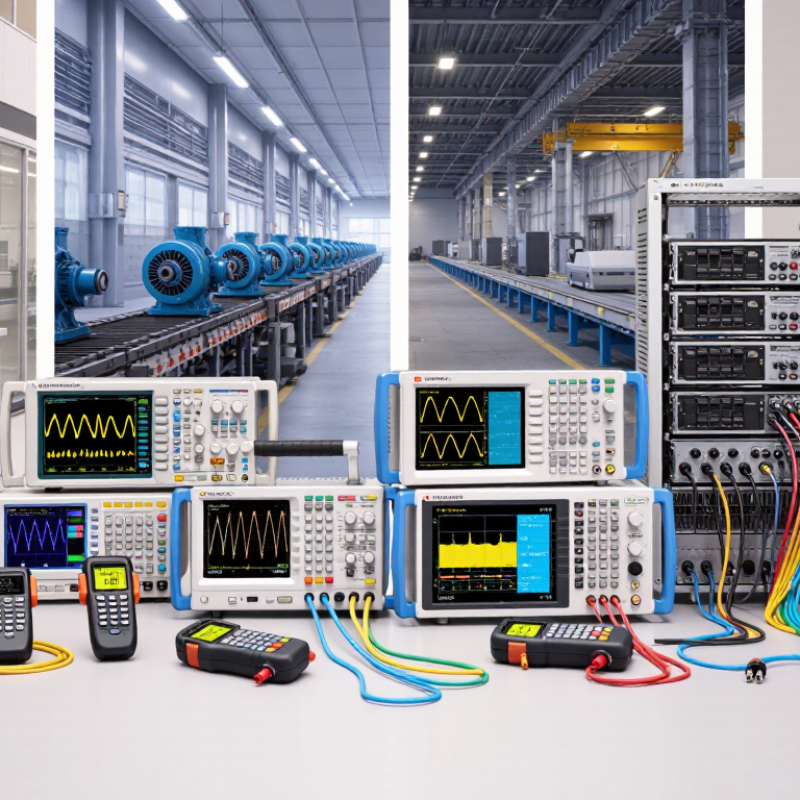
Top 10 AC Power Analyzers for Global Buyers
What Is an AC Power Analyzer and Why Does It Matter?
An AC power analyzer measures electrical performance in real operating conditions. It records voltage, current, frequency, power factor, and energy use. Advanced models also examine harmonics, phase imbalance, and transient events. These details reveal problems that ordinary meters may miss. For example, a motor can appear normal while drawing excessive reactive power. That hidden demand may increase operating costs and heat.
Reliable measurements support better engineering decisions. Manufacturers use analyzers to test equipment efficiency and verify design changes. Facility teams use them to investigate unstable loads or unexpected energy consumption. Global buyers should check measurement accuracy, sampling speed, safety ratings, and calibration documentation. Local voltage systems also differ. A suitable analyzer must match the intended frequency, phase configuration, and installation environment.
Tips: Define the measurement task before comparing models. Confirm the required current range and connection method. Ask for recent calibration evidence. Test the instrument with a known reference when possible. Keep records of settings, probe placement, and environmental conditions. Small setup errors can distort valuable results. No analyzer is perfect. Even experienced technicians may overlook waveform distortion or an unsuitable clamp position. That is why repeat testing and practical judgment still matter.
Global electricity demand is accelerating. The IEA Electricity 2024 report forecasts average annual growth of 3.4% through 2026. This makes accurate AC measurement more important for factories, laboratories, and renewable energy sites. Buyers should compare measurement functions, not only screen size or advertised price.
Start with true RMS voltage and current, active power, apparent power, reactive power, and power factor. Harmonic analysis is equally important. IEEE 519-2022 provides widely used guidance for managing harmonic distortion in power systems. A capable analyzer should measure THD, individual harmonics, phase imbalance, and frequency with stable accuracy.
Check bandwidth and sampling rate carefully. A narrow bandwidth may hide switching noise or short transients.
Look for inrush-current capture, voltage dips, swells, interruptions, and waveform recording. These functions help explain why a motor trips or a converter overheats. IEC 61000-4-30 defines methods for power-quality measurements, supporting more consistent comparisons between instruments.
Data logging, time synchronization, and exportable reports also matter during long tests. A bright display is helpful, but it proves little. The difficult part is accuracy under changing loads.
Even experienced teams can overlook sensor phase error, installation direction, or unsuitable current probes. Always verify the analyzer against a traceable reference before trusting a critical result.
Top 10 AC Power Analyzers for Global Buyers should be compared through measurable specifications, not display size or marketing claims. In field audits, voltage accuracy, current accuracy, and phase-angle error often determine whether a loss calculation is useful. Look for compliance with IEC 61000-4-30 Class A and measurement guidance from IEEE 1459. These references improve consistency across sites and grid conditions.
Sampling rate matters. A fast converter can capture short transients, inrush current, and distorted waveforms more clearly. However, higher sampling is not automatically better. Bandwidth, anti-aliasing, and synchronized voltage-current channels must work together. For harmonics, check compliance with IEC 61000-4-7 and confirm measurement up to at least the 50th harmonic. Four-channel inputs help when neutral currents or three-phase imbalance require inspection. The IEA Electricity 2024 report projects global electricity demand to rise by more than 6% between 2024 and 2026, increasing the value of dependable efficiency data.
Tips: Compare total accuracy across the expected current range, not only the best-case figure. Select CAT III or CAT IV protection for the installation environment. Verify logging memory, time synchronization, export formats, and battery endurance before purchase. A 1% reading error may appear small, yet it can distort long-term energy-cost studies. I have seen excellent instruments weakened by poor clamp positioning and unclear software. The operator still matters.
Top 10 AC Power Analyzers for Different Buyer Requirements
Global buyers need different AC power analyzers for different working conditions. A factory engineer may need three-phase accuracy, while a service technician may prefer a lightweight handheld unit. Laboratory users often require wide bandwidth, harmonic analysis, and stable data logging. Energy auditors usually value simple reports, clamp compatibility, and long battery life. Choose according to the measurement task, not the product’s feature count.
For motor testing, check voltage imbalance, inrush current, power factor, and transient capture. For renewable energy systems, verify waveform quality during changing loads. A model for switchgear commissioning should support safe probe connections and clear phase information. Buyers comparing ten options should also inspect sampling speed, input range, display readability, software export, and internal memory. These details matter when measurements are taken beside loud equipment or inside a crowded electrical cabinet.
Calibration traceability is essential for professional reports. Request current certificates, stated uncertainty, and testing conditions before purchase. Confirm that accessories match local voltage systems and safety requirements. A cheaper analyzer may appear efficient, but limited logging can create extra labor later. I have found that impressive accuracy claims mean little without a clear test method. It is also easy to overlook screen visibility under harsh lighting. Leave room for operator judgment. No analyzer removes the need to verify connections, repeat unusual readings, and question data that looks perfect.
| No. | Buyer Requirement | Recommended Analyzer Type | Supported System | Typical Voltage Range | Typical Current Range | Frequency Range | Typical Basic Accuracy | Core Measurements | Useful Interfaces | Relevant Standards or Functions |
|---|---|---|---|---|---|---|---|---|---|---|
| 1 | Affordable single-phase laboratory testing | Entry-level bench AC power analyzer | 1-phase, 2-wire | Up to 600 V AC | Up to 20 A direct input | 45–65 Hz | Approximately ±0.1% of reading | Voltage, current, active power, apparent power, power factor, energy and frequency | USB; optional RS-232 | RMS measurement, programmable integration period and data logging |
| 2 | Portable maintenance and troubleshooting | Handheld power-quality analyzer | 1-phase and 3-phase systems | Up to 1,000 V CAT III or 600 V CAT IV, depending on configuration | Flexible current probes or clamps, commonly up to 3,000 A | DC to 50/60 Hz measurement; harmonic analysis commonly to the 50th order | Approximately ±0.5% of reading for power measurements | Voltage dips, swells, interruptions, inrush current, harmonics, unbalance, power and energy | USB, Bluetooth or removable memory | Event capture, waveform recording and safety-category ratings |
| 3 | High-accuracy motor and drive evaluation | Precision multi-channel power analyzer | Up to 3-phase, 4-wire; optional motor inputs | Direct inputs commonly up to 1,000 V; external sensors for higher voltages | Direct inputs commonly up to 30 A; external current sensors supported | DC and fundamental frequencies from 0.1 Hz to several kHz | Approximately ±0.05% of reading for electrical power | Input and output power, efficiency, torque-related measurements, harmonics and phase angle | Ethernet, USB, RS-232 or GPIB | Synchronized channel sampling, low-power-factor measurement and motor-efficiency testing |
| 4 | Three-phase industrial load monitoring | Three-phase industrial power analyzer | 1-phase, 3-phase 3-wire and 3-phase 4-wire | Up to 1,000 V line-to-line with suitable connections | Direct current input or external CTs and Rogowski coils | 45–65 Hz; optional wider frequency measurement | Approximately ±0.2% of reading | Per-phase voltage, current, kW, kVAR, kVA, PF, demand, energy and unbalance | Ethernet, RS-485, Modbus RTU or Modbus TCP | Continuous logging, alarm limits and three-phase wiring compensation |
| 5 | Power-quality compliance studies | Class A power-quality analyzer | Single-phase and three-phase networks | Up to 1,000 V CAT III or 600 V CAT IV, according to the connection method | Clamp, flexible coil or Rogowski-coil inputs | 50/60 Hz systems; harmonic and interharmonic analysis | Class A performance for applicable power-quality parameters | Harmonics, interharmonics, flicker, rapid voltage changes, dips, swells, interruptions and unbalance | Ethernet, USB and removable storage | IEC 61000-4-30 Class A measurement functions; IEC 61000-4-7 and IEC 61000-4-15 analysis |
| 6 | Standby-power and low-current product testing | High-sensitivity low-power analyzer | 1-phase, 2-wire | Up to 600 V AC | mA-level measurement to approximately 20 A | DC to at least 100 kHz, depending on bandwidth mode | Approximately ±0.1% of reading plus low-level range uncertainty | Watt-hours, no-load power, inrush, crest factor, harmonics and power factor | USB, Ethernet or GPIB | High-speed sampling, integration timers and automated pass/fail limits |
| 7 | Renewable-energy inverter and storage testing | Wide-bandwidth AC/DC power analyzer | DC input plus 1-phase or 3-phase AC input | AC inputs commonly up to 1,000 V; higher voltage through external sensors | Direct current input or isolated sensors, commonly up to 30 A per channel | DC to several hundred kHz, depending on the model | Approximately ±0.1% of reading for electrical power | Conversion efficiency, DC ripple, AC output power, switching harmonics and transient behavior | Ethernet, USB, GPIB or analog synchronization | Simultaneous AC/DC sampling, synchronized channels and configurable bandwidth filters |
| 8 | Data-center and facility energy management | Networked power and energy meter-analyzer | Single-phase and three-phase systems | Direct measurement commonly up to 690 V AC | CT, split-core CT or Rogowski-coil input | 45–65 Hz | Approximately 0.2S to 0.5S, depending on the current transformer and installation | Real-time power, energy, demand, peak demand, PF, harmonics and operating hours | Ethernet, RS-485, Modbus TCP/RTU and pulse output | Remote dashboards, interval data logging, alarms and multi-circuit monitoring |
| 9 | Compliance testing for electrical and electronic equipment | Laboratory compliance power analyzer | 1-phase and 3-phase configurations | Up to 600 V AC direct input | mA-level to 30 A, with external sensors for larger loads | DC to at least 100 kHz, subject to the measurement mode | Approximately ±0.1% of reading | RMS voltage and current, active power, energy, harmonics, crest factor and inrush | USB, Ethernet, RS-232 or GPIB | Automated test sequences, limit comparison, remote control and report export |
| 10 | Long-term utility and industrial asset trending | Fixed installation power-monitoring analyzer | 1-phase, 3-phase 3-wire and 3-phase 4-wire | Up to 690 V AC direct measurement; higher systems use voltage transformers | External CTs, Rogowski coils or current transformers | 45–65 Hz for standard utility systems | Typically Class 0.5S or better for active-energy measurement, depending on the complete sensor chain | Energy import/export, demand, voltage quality, harmonics, alarms and phase unbalance | Ethernet, RS-485, Modbus, MQTT or digital outputs | Interval recording, time synchronization, remote alarms and database integration |
| Specification ranges are representative of commonly available AC power analyzer classes. Final performance depends on the selected voltage and current sensors, wiring method, measurement bandwidth, environmental conditions and applicable regional safety requirements. | ||||||||||
Global electricity demand is rising quickly. The International Energy Agency’s Electricity 2024 report forecasts around 4% growth in 2024 and 2025. This increases the need for dependable AC power measurements in factories, laboratories, and renewable-energy projects.
Global buyers should compare the top ten analyzers against actual operating conditions, not only advertised accuracy. Check voltage range, current inputs, sampling rate, bandwidth, harmonic analysis, and data-export formats. IEC 61000-4-30 Class A compliance supports consistent power-quality measurements. However, compliance claims require verification through certificates and test records.
Supplier evaluation needs equal attention. Request calibration evidence from an ISO/IEC 17025-accredited laboratory, traceable serial numbers, and uncertainty data. Ask whether replacement sensors are available locally. Delivery promises can look attractive. Customs delays may still disrupt a project. The supplier should explain firmware updates, training, warranty handling, and remote support in clear writing.
A spreadsheet can mislead. Total cost includes probes, software, calibration, shipping, taxes, and downtime. Ask for a sample measurement file before purchasing. Test it with your own reporting workflow. Some interfaces appear simple but become frustrating after repeated field use. I would also score documentation quality, because vague manuals often predict slower commissioning and avoidable measurement errors.
Focus on voltage accuracy, current accuracy, and phase-angle error. These values affect energy-loss calculations and long-term efficiency studies. Display size matters less.
A fast sampling rate can capture short transients, inrush current, and distorted waveforms. However, higher speed alone does not guarantee better measurements. Bandwidth and anti-aliasing must also match the application.
Check compliance with IEC 61000-4-7. Confirm measurement capability through at least the 50th harmonic. Ask for supporting test records, not only written claims.
Four channels help inspect neutral currents and three-phase imbalance. They are useful in factories, laboratories, and complex electrical installations. More channels are not always necessary.
Select CAT III or CAT IV protection for the installation environment. The correct category depends on the measurement location and expected electrical conditions. Safety comes before convenience.
Request calibration evidence from an ISO/IEC 17025-accredited laboratory. Ask for traceable serial numbers and measurement uncertainty data. Certificates should be verifiable.
Include probes, software, calibration, shipping, taxes, and possible downtime. Replacement sensors may also affect total ownership cost. The cheapest quote may not stay cheap.
Request a sample measurement file and test it with your reporting workflow. Check export formats, memory capacity, time synchronization, and battery endurance. Try repeated field use. Interfaces can become frustrating.
An AC Power Analyzer is an essential instrument for evaluating the quality, stability, and efficiency of alternating-current electrical systems. This guide explains why accurate power analysis matters across industrial, commercial, laboratory, and energy applications. It reviews key measurement functions, including voltage, current, active power, apparent power, reactive power, power factor, frequency, harmonics, energy consumption, and waveform analysis. It also highlights technical specifications that influence performance, such as accuracy, bandwidth, sampling rate, measurement range, display capabilities, data storage, connectivity, and safety features.
The guide compares the top 10 AC Power Analyzers according to different buyer requirements, including portability, advanced research, production testing, system monitoring, and cost efficiency. It also offers practical advice for global buyers evaluating suppliers and purchasing options. Important considerations include product reliability, calibration support, documentation, warranty coverage, communication standards, delivery capabilities, after-sales service, and compliance with applicable safety requirements. By assessing both instrument performance and supplier dependability, buyers can select a suitable solution for their technical objectives and long-term operational needs.
