10 Power Conversion Tips for Global Buyers

Time:2026-09-21 Author:Amelia
0%

Buying power equipment across borders can look simple until voltage, frequency, and plug standards create costly surprises. Power Conversion connects a device’s electrical needs with the conditions found at its destination. A product designed for 120V, 60Hz service may perform poorly on a 230V, 50Hz network without suitable equipment.

This guide presents ten practical tips for global buyers. It focuses on details that experienced procurement teams check before placing an order. These include rated input ranges, continuous output, peak loads, efficiency, thermal protection, certifications, and enclosure design. A label may show “universal input,” but that claim still deserves verification. Ask for test reports, technical drawings, and operating limits. Keep records.

Small details matter. A warm adapter in a hotel room can signal overload, poor ventilation, or an unsuitable converter. Shipping conditions matter too. Humidity, dust, customs documentation, and replacement access can affect long-term performance. Reliable suppliers should explain these risks clearly and provide traceable specifications.

No checklist removes every uncertainty. I have seen buyers compare prices carefully while overlooking cable length or local service support. That mistake can delay an installation for weeks. Testing one sample under realistic conditions remains wiser than trusting attractive product photos. Requirements also change between regions and applications, so professional review is valuable. Use recognized standards and qualified engineers where necessary. The goal is not merely to make equipment operate. It is to achieve safe, stable, efficient, and supportable performance after delivery.
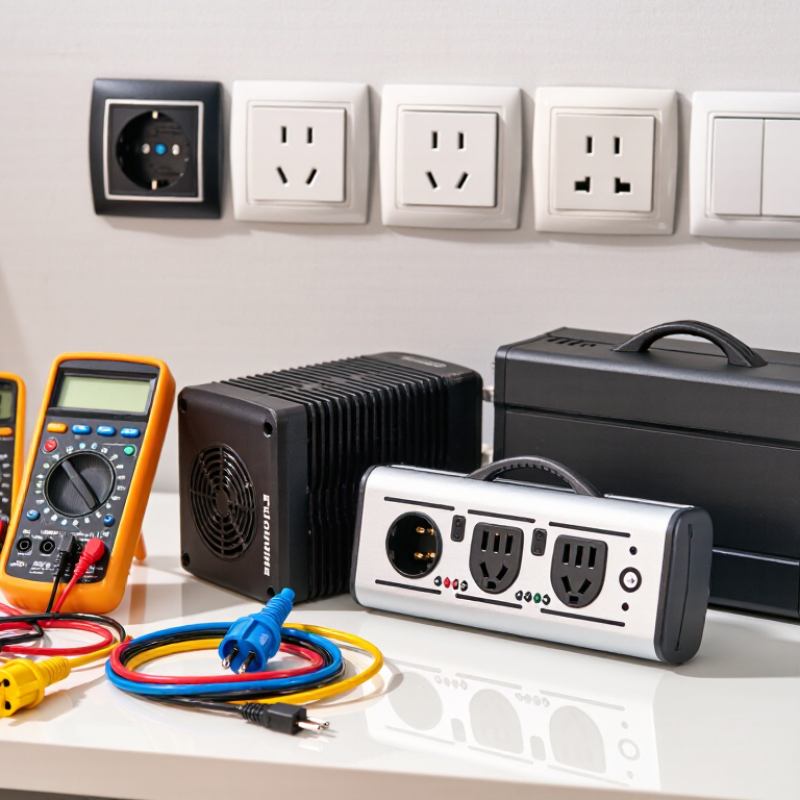
10 Power Conversion Tips for Global Buyers

Define Power Conversion Needs and Regional Requirements

Global buyers should define power conversion needs before comparing suppliers. Start with equipment input voltage, frequency, phase, and rated wattage. Record startup surge, continuous load, and duty cycle. A motor may demand twice its running power. Small errors become costly.

Regional requirements shape the specification. Check local voltage, frequency tolerance, plug configuration, grounding, enclosure rules, and efficiency requirements. Confirm whether the converter meets recognized safety and electromagnetic compatibility standards in the destination market. Ask for test reports, installation limits, and traceable production records. Do not treat a generic “global” label as proof. Requirements can differ between nearby countries. Climate matters too. Heat, humidity, dust, and altitude can reduce performance. Leave thermal headroom. It is easy to underestimate it.

A reliable purchasing process uses actual operating data, not only catalog figures. Share cable length, upstream protection, expected load changes, and maintenance access with the technical team. Request sample evaluation under realistic conditions, including cold starts and peak demand. Keep questions written and dated. This protects both sides when specifications change. No checklist is perfect. Recheck frequency compatibility before approving an order, especially when equipment crosses regions. That extra review may prevent overheating, unstable output, or expensive field adjustments.

Match Voltage, Frequency, and Plug Standards Correctly

10 Power Conversion Tips for Global Buyers

Match Voltage, Frequency, and Plug Standards Correctly

Global power conversion begins with matching three details: voltage, frequency, and plug geometry. A device rated for 220–240 volts may fail on a 100–120-volt supply. The reverse can create overheating, insulation damage, or a blown fuse. Check the product label, manual, and destination outlet before purchasing. Do not rely on plug shape alone.

V

Frequency matters too. Motors, timers, fans, and some heating controls may behave differently at 50 or 60 hertz. A voltage converter changes electrical potential, but it may not correct frequency. For sensitive equipment, confirm both ratings with the manufacturer or a qualified electrician. An adapter changes the plug format only. It does not transform voltage.

Calculate the equipment’s continuous wattage and starting surge before selecting a converter. Refrigerators, pumps, and tools often demand extra power during startup. Leave a safety margin instead of choosing the smallest available unit. Grounding is equally important, especially for metal-cased equipment used in kitchens, workshops, or damp areas. I still recheck every label, because familiar plug designs can create false confidence. A previous purchase may have worked, but that does not prove the setup was safe. Verify local electrical requirements, cable condition, and overload protection before regular use.

Compare Converter Types, Capacity, Efficiency, and Safety

10 Power Conversion Tips for Global Buyers

Compare Converter Types, Capacity, Efficiency, and Safety

Choosing a power converter starts with the load, not the plug. A step-down converter lowers voltage, while a step-up model increases it. An inverter changes direct current into alternating current. A transformer may suit fixed-frequency equipment but cannot replace every electronic converter. Check the input voltage, output voltage, frequency, and waveform before ordering.

Capacity needs practical headroom. Add the wattage of connected devices, then allow roughly 20 to 30 percent extra capacity. Motors, heaters, and compressors can draw much more during startup. A 500-watt load may briefly demand 750 watts. I have seen undersized units become hot, noisy, and unreliable. That mistake is easy to repeat.

Efficiency affects heat, operating cost, and service life. Compare rated efficiency at your expected load, not only the best figure on the datasheet. Look for overload, short-circuit, over-temperature, and surge protection. Confirm that ventilation openings will not sit against luggage or a wall. A cool enclosure is a useful warning sign. Still, temperature depends on room conditions and cable quality. Measure output voltage with a suitable meter when possible. Certification marks should match the destination market, and independent test reports deserve more trust than vague sales language. Specifications can be incomplete; careful verification remains necessary.

10 Power Conversion Tips for Global Buyers — Compare Converter Types, Capacity, Efficiency, and Safety

Use the specifications below as practical comparison guidelines. Actual performance depends on input voltage, load level, cable quality, ambient temperature, and the converter’s design.

Tip Converter Type Typical Input Typical Output Common Capacity Range Typical Efficiency Key Safety Requirements Best Buying Consideration
1 USB-C Power Delivery Charger 100–240 V AC, 50/60 Hz 5–48 V DC, negotiated through USB-C PD 20–240 W Approximately 85–95% Over-voltage, over-current, short-circuit, and over-temperature protection; use certified USB-C cables rated for the required power. Match the charger’s PD profile and wattage to the device. High-power laptops may require 65 W, 100 W, or more.
2 AC-to-DC Switching Adapter 100–240 V AC, 50/60 Hz Commonly 5, 9, 12, 15, 19, or 24 V DC 5–300 W Approximately 80–94% Input fuse, insulation, grounding where required, thermal protection, and correct output polarity are important. Verify output voltage, current rating, connector size, polarity, plug format, and applicable electrical approvals.
3 DC-DC Buck Converter Higher DC voltage than the required output Reduced, regulated DC voltage 5–1,000 W Approximately 85–97% Check maximum input voltage, continuous current, heat dissipation, reverse-polarity protection, and short-circuit protection. Allow operating headroom: the input voltage must remain above the required output plus the converter’s dropout margin.
4 DC-DC Boost Converter Lower DC voltage than the required output Increased, regulated DC voltage 5–500 W Approximately 80–95% Confirm input-current limits, temperature rise, output over-voltage protection, and battery low-voltage protection when applicable. Higher output power requires substantially higher input current; size the battery, wiring, and fuse accordingly.
5 AC Inverter 12, 24, or 48 V DC 110–120 V or 220–240 V AC 150–5,000 W continuous; higher surge ratings may apply Approximately 80–95% Use DC-side fusing, adequate cable sizing, ventilation, low-voltage shutdown, overload protection, and proper grounding. Compare continuous power with surge power. Motors, compressors, and pumps can require several times their running wattage at startup.
6 Travel Voltage Converter Typically 110–120 V AC or 220–240 V AC Typically 110–120 V AC or 220–240 V AC 50–2,000 W, depending on design Approximately 85–98% Use only with compatible loads; check thermal protection, fuse rating, grounding, and whether the device is suitable for continuous operation. Do not confuse a plug adapter with a voltage converter. A plug adapter changes the physical plug shape but does not change voltage.
7 Frequency Converter AC input at one specified frequency and voltage AC output at a selected frequency and voltage 0.2–500 kVA or more in industrial systems Approximately 90–98% Require overload protection, suitable grounding, electromagnetic compatibility controls, and correct motor or equipment settings. Confirm both voltage and frequency requirements. A voltage converter alone cannot change 50 Hz power to 60 Hz or vice versa.
8 Isolation Transformer AC at the source voltage and frequency Usually the same AC voltage, electrically isolated 50 VA–25 kVA or more Approximately 90–98% Isolation does not eliminate shock risk. Use protective earthing, suitable insulation, correct fusing, and installation by qualified personnel where required. Choose an isolation transformer for galvanic separation and noise reduction, not primarily for voltage conversion or energy savings.
9 Uninterruptible Power Supply AC mains input, with internal battery backup Regulated AC output; some models also provide DC outputs 300 VA–10 kVA or more Approximately 85–97% in normal mode Battery protection, overload protection, ventilation, correct battery replacement, and adequate clearance are essential. Compare VA and watt ratings, battery runtime at the intended load, transfer time, waveform, and output voltage compatibility.
10 Programmable Industrial Power Supply Single-phase or three-phase AC, according to model Adjustable DC or AC output 100 W–30 kW or more Approximately 85–96% Use current limiting, over-voltage protection, emergency shutdown, protective earth, and appropriate enclosure and cooling. Evaluate regulation accuracy, ripple, transient response, remote control interfaces, duty cycle, and calibration requirements.

Important: Capacity is expressed as output power unless otherwise stated. Efficiency varies with load; many converters reach their best efficiency near a moderate-to-high portion of their rated load. Always verify local voltage, frequency, plug, grounding, certification, and installation requirements before purchase or use.

Verify Certifications, Compatibility, and Supplier Reliability

Global power conversion purchases often fail before shipment. A converter may carry a familiar voltage label, yet its waveform or frequency may not suit your equipment. Ask for the complete datasheet, test conditions, and recent certification reports. Check whether certificates match the exact model, revision, and factory address. A copied PDF is not enough. Look for issuing-body details, traceable report numbers, and dates. Keep photographs of labels and terminal markings from the sample unit. Small details matter.

Tip: Build a compatibility sheet before requesting a quote. Record input voltage, frequency, phase, plug type, output range, load profile, efficiency, cooling method, and required protection. Test the converter with your real load, not only a lamp or resistor. Motors, medical instruments, and control boards can react differently during startup. Leave margin for voltage variation. I have seen buyers trust “universal” wording too quickly. That word needs evidence.

Tip: Audit supplier reliability with practical questions. Request production test records, warranty terms, spare-part access, response times, and change-notification procedures. Confirm who handles failures after delivery and where repairs occur. A video call can reveal whether staff understand your application, but it is not proof. Order a sample, inspect its markings, and repeat key tests after a heat cycle. No checklist is perfect. Recheck assumptions before placing a large order, especially when the supplier avoids precise answers.

Plan Installation, Testing, Maintenance, and Total Cost

10 Power Conversion Tips for Global Buyers

Tip 1: Confirm the local voltage, frequency, phase, and plug requirements before ordering. A converter that fits the voltage may still fail with the wrong frequency. Tip 2: List every connected load, including motors, heaters, controls, and standby equipment. Tip 3: Add starting-current demand, not only the rating shown on the nameplate. Tip 4: Keep practical headroom. Operating at full capacity can increase heat and shorten service life.

Tip 5: Plan installation around airflow, clearance, humidity, dust, and cable length. A clean wall location is often safer than a cramped cabinet. Tip 6: Have a qualified local electrician check grounding, protection, and regional requirements. Tip 7: Test the system before production begins. Measure input voltage, output voltage, frequency, temperature, and load behavior. Tip 8: Test again under realistic load. An empty bench test can hide unstable performance. I have seen this mistake delay commissioning.

Tip 9: Create a maintenance schedule with inspection dates, cleaning steps, torque checks, and replacement intervals. Record readings in a simple log. Small changes can reveal loose connections or cooling problems. Tip 10: Compare total cost, not purchase price alone. Include shipping, installation, protective devices, energy loss, maintenance, spare parts, and downtime. A cheaper unit may cost more after three years. This calculation is easy to underestimate. Leave room for local service support and unexpected adjustments.

10 Power Conversion Tips for Global Buyers

Plan installation, testing, maintenance, and total cost by checking the representative nominal low-voltage supply requirements in each target market.

Representative nominal single-phase supply voltages. Actual service voltage, frequency, plug configuration, grounding, and permitted tolerances must be verified with local electrical regulations before installation.

1. Confirm voltage
Match the equipment input range with the destination supply.
2. Confirm frequency
Check whether the equipment supports 50 Hz, 60 Hz, or both.
3. Check phase requirements
Verify single-phase or three-phase compatibility.
4. Assess load capacity
Calculate continuous power, starting current, and peak demand.
5. Select conversion equipment
Size transformers, converters, and protective devices with operating margin.
6. Plan installation
Allow space for ventilation, cable routing, isolation, and safe access.
7. Test before commissioning
Verify output voltage, frequency, polarity, grounding, and protective functions.
8. Document acceptance results
Record test readings, settings, serial references, and approval status.
9. Schedule maintenance
Inspect connections, cooling systems, insulation, alarms, and wear components.
10. Calculate total cost
Include purchase, installation, energy losses, servicing, downtime, and disposal.

Reference framework: IEC 60038 nominal supply voltages and applicable national electrical codes. Local engineering review is required for final selection.

FAQS

How do I choose the right converter type?

Start with the equipment load, not the plug shape. A step-down converter lowers voltage. A step-up converter raises it. An inverter changes direct current into alternating current. A transformer may work with fixed-frequency equipment. It cannot replace every electronic converter. Check voltage, frequency, and waveform carefully.

How much capacity should a converter have?

Add the wattage of all connected devices. Then allow about 20 to 30 percent extra capacity. Motors and compressors may draw much more during startup. A 500-watt load might briefly require 750 watts. Do not size it exactly. That shortcut often creates heat and noise.

Why does efficiency matter?

Efficiency affects heat, energy cost, and service life. Compare efficiency at your expected load. Do not rely only on the highest datasheet figure. A converter operating near full capacity may run hot. A cool enclosure helps, but it proves nothing alone. Room temperature and cable quality also matter.

Which safety protections should I check?

Look for overload, short-circuit, over-temperature, and surge protection. Keep ventilation openings away from walls, luggage, and dust. Provide clear space around the enclosure. Measure output voltage with a suitable meter when possible. Protection details can be incomplete. Verify them before ordering.

How can I verify compatibility before buying?

Prepare a compatibility sheet before requesting quotations. Record input voltage, frequency, phase, plug type, and output range. Include efficiency, cooling method, and protection requirements. Test the converter with the real equipment. A lamp or resistor may hide startup problems. “Universal” needs evidence.

What certification details should I request?

Request the complete datasheet and recent test reports. Check the exact model, revision, factory address, and report date. Look for issuing-body information and traceable report numbers. A copied PDF is not enough. Photograph labels and terminal markings on the sample unit. Small details can expose a mismatch.

How should I assess supplier reliability?

Request production test records, warranty terms, and spare-part information. Ask who handles failures after delivery. Confirm response times and repair locations. A video call may show useful knowledge. It is not proof. Order a sample and repeat key tests after heating.

What installation and maintenance steps are important?

Plan for airflow, humidity, dust, clearance, and cable length. A clean wall is often safer than a cramped cabinet. Have a qualified local electrician check grounding and regional requirements. Test voltage, frequency, temperature, and load behavior before production. Create a log for cleaning and torque checks. Compare shipping, energy loss, repairs, and downtime. The cheapest unit may cost more later.

Conclusion

For global buyers, successful Power Conversion begins with clearly identifying the equipment’s voltage, frequency, power rating, operating environment, and destination-market requirements. Buyers should carefully match these specifications with local plug and socket standards to prevent poor performance, overheating, or equipment damage. Comparing converter types, load capacity, energy efficiency, protection features, and expected service life is also essential for selecting a suitable solution. The right choice should support both continuous operation and occasional peak demand without unnecessary energy loss.

Before purchase, buyers should verify relevant certifications, technical documentation, product compatibility, and supplier reliability. A complete plan should also cover professional installation, initial testing, routine maintenance, spare parts, warranty support, and safe operating procedures. Evaluating the total cost—including transportation, installation, energy use, maintenance, and replacement—can reveal the true long-term value of each option. By combining technical accuracy, safety checks, and lifecycle planning, international buyers can reduce operational risks and build a dependable power supply strategy for different regional markets.

Amelia

Amelia

Amelia is a seasoned marketing professional with a wealth of expertise in our company’s core offerings. With an unwavering passion for driving growth and innovation, she plays a pivotal role in shaping our marketing strategies and enhancing brand visibility. A key aspect of her responsibilities......