How to Choose the Right Load Bank for Your Project?
Choosing the right Load Bank can determine whether a commissioning test reveals real weaknesses or creates false confidence. In the field, engineers often begin with capacity and overlook the operating environment. A 500 kW unit may appear suitable on paper. However, voltage, phase configuration, frequency, and load-step requirements can change the decision. A diesel generator tested beside a cool workshop behaves differently from one operating inside a hot plant room. Small details matter.
A practical selection begins with the project’s test objective. Resistive Load Bank models suit many generator and UPS tests. Reactive or combined units may better represent motor and transformer behavior. Confirm the required kW, kVA, voltage range, connection method, duty cycle, and cooling arrangement. Check whether the equipment supports remote monitoring and clear test records. These features improve repeatability and help technicians identify unstable voltage, overheating, or poor frequency control.
Experience also shows that transport and setup deserve early attention. A compact unit can still require strong access routes, suitable cables, and reliable ventilation. I have seen tests delayed because a Load Bank could not pass through a narrow doorway. That mistake is easy to prevent. Review manufacturer data, maintenance support, safety controls, and relevant testing standards before purchasing or renting. No single specification proves suitability. The best choice balances technical performance, site conditions, operator skill, budget, and future use. Even experienced teams can misjudge demand. Rechecking assumptions is part of responsible engineering.
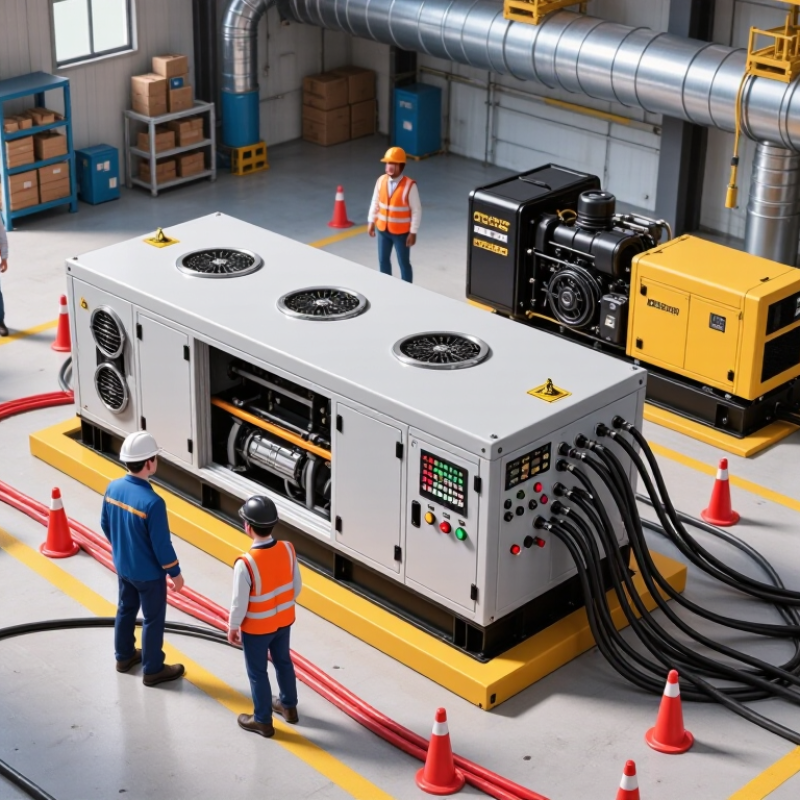
Load Bank Fundamentals and Their Role in Project Testing
How to Choose the Right Load Bank for Your Project?
Load banks convert electrical output into a controlled, measurable load. They help verify generators, UPS systems, batteries, and transfer equipment before commissioning. This matters because the Uptime Institute’s 2024 Global Data Center Survey found that 53% of respondents experienced an outage during the previous three years. A no-load generator test may confirm starting performance, but it cannot reveal overheating, unstable voltage, or poor fuel-system behavior.
Choose the bank by matching real project conditions. Confirm continuous and peak kW, voltage, phase, frequency, connection type, and test duration. Resistive banks suit basic capacity checks. Reactive or combined banks better represent motors, transformers, and power-factor demands. NFPA 110 requires regular loaded exercising for many emergency power systems, but project specifications may demand longer or more demanding tests. Do not size only for today’s load. Future expansion can make a small bank expensive twice. A perfect-looking test can still be misleading.
Tips: Record voltage, frequency, current, power factor, exhaust temperature, and ambient conditions. Keep the bank clear of walls and combustible materials. Check airflow direction before energizing. Use calibrated instruments and an approved switching procedure. If the site load changes during testing, pause and reassess the plan. Field teams sometimes discover that the test method, not the equipment, created the confidence gap. That deserves honest review.
FAQS
A load bank converts electrical output into a controlled, measurable load. It tests generators, UPS systems, batteries, and transfer equipment. No-load testing is not enough. Loaded testing can reveal overheating, unstable voltage, and weak fuel-system performance.
Match the equipment to the real application. Resistive banks suit steady capacity checks and routine generator testing. Resistive-reactive banks better imitate motors, pumps, compressors, and transformers. The wrong type may create false confidence.
Check the generator’s rated kW and power factor first. A 500 kW generator may need more than a 500 kW bank. A practical margin often ranges from 10 to 20 percent. Include future expansion, starting current, and possible load changes. More capacity is not always better.
The load bank must suit the system under test. Confirm voltage, phase, frequency, and connection type before delivery. A 480-volt, three-phase unit cannot replace a 400-volt unit casually. Small mismatches can produce dangerous current or misleading results. Check the cables too.
Calculate current using voltage, phase, power factor, and load size. Review cable ratings, connectors, and protective devices. Reactive loading can change current significantly. A simple load schedule can expose missing test steps. Spreadsheets can still be wrong.
Continuous testing requires enough cooling capacity for long operation. Short-duration testing may use a different design. Review altitude, ambient temperature, airflow, noise, and installation space. Hot outdoor areas can reduce safe capacity. Dust makes blocked airflow worse.
Keep the load bank away from walls and combustible materials. Confirm the airflow direction before starting. Check cable length, connection points, drainage, and ventilation. Water-cooled units need clean water and corrosion control. Do not improvise here.
Record voltage, frequency, current, power factor, and load steps. Also record exhaust temperature and ambient conditions when relevant. Use calibrated instruments and approved switching procedures. If site demand changes, pause and reassess the plan. A delayed test is better than a misleading result.
Stop and investigate instead of forcing the planned schedule. Check instruments, connections, airflow, load steps, and operating conditions. The test method may have created the confidence gap. Review the process honestly. That uncomfortable pause may prevent a larger failure.
Conclusion
Choosing the right Load Bank is essential for verifying the performance, reliability, and safety of an electrical system before it enters service. The selection process should begin with a clear understanding of the project’s testing goals, such as commissioning, maintenance, emergency power verification, or capacity validation. Different applications and operating environments may require resistive, reactive, or combined load solutions, depending on the equipment being tested and the expected conditions.
Before selecting a unit, calculate the required load capacity, voltage range, phase configuration, frequency, and duty cycle to ensure accurate and dependable testing. Environmental factors, installation space, transportation needs, and cooling requirements should also be considered. Finally, evaluate safety protections, control methods, monitoring capabilities, mobility, and service support. A well-matched Load Bank can improve test efficiency, reduce operational risk, and provide reliable performance data throughout the project lifecycle.
