How to Choose a High Voltage Power Supply?

Time:2026-09-26 Author:Ethan
0%

Choosing a High Voltage Power Supply is not simply a matter of selecting the largest voltage rating. The right unit must match the load, operating range, output stability, and intended environment. A supply for a laboratory detector may need exceptionally low ripple; a production test bench may place greater emphasis on repeatability and protection. Small details matter. A cable’s insulation, connector spacing, and enclosure can affect safe, reliable operation as much as the supply itself.

High-voltage engineering authority Allan Greenwood’s work on electrical transients offers a useful reminder: rated voltage is only part of the picture; transient behavior also deserves attention. Treat that as a design principle, not a substitute for checking a specific model’s datasheet. Compare output voltage and current, regulation, ripple, response time, polarity, monitoring options, and overload protection. Then confirm that the manufacturer documents the operating limits clearly. Look for details such as an interlock, a discharge path, and practical service guidance. Ask how the unit behaves when the load changes. Ask what happens after shutdown. These questions are easy to overlook.

There is no universal best choice. A supply that looks impressive on paper may be poorly matched to a sensitive load. And a lower-cost model may leave key safeguards unclear. Careful selection takes patience. It also takes a little skepticism: specifications need context, and real operating conditions rarely fit a neat table.
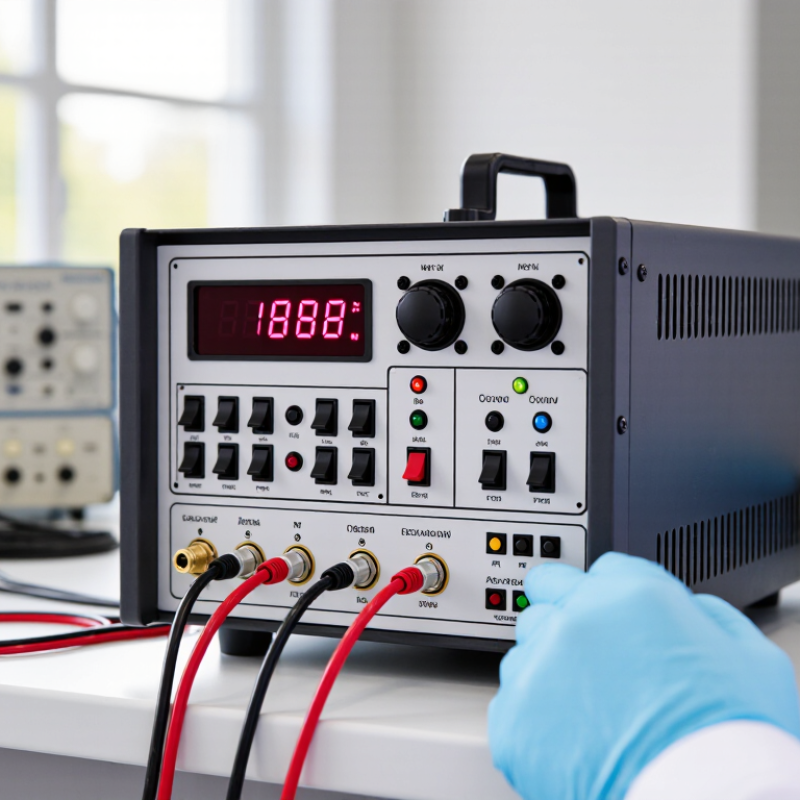
How to Choose a High Voltage Power Supply?

Define the Voltage, Current, and Power Requirements

Choosing a high voltage power supply starts with the load’s actual voltage range, not just its headline value. Record the normal operating voltage, required adjustment range, and any brief startup peaks. Check whether the load needs steady DC or a changing output. A cable run or protective component can also affect the voltage delivered at the load. Small details matter.

Estimate both continuous current and short-duration demand. Capacitive loads, for example, may draw a sharp current pulse during startup. Then calculate output power using voltage multiplied by current, and confirm the supply can provide that power at your intended operating point. Maximum voltage and maximum current may not be available simultaneously. Allow sensible margin for temperature, component variation, and future changes, but avoid oversizing without a reason. That estimate can still be wrong.

Tips: Put voltage, continuous current, peak current, and duty cycle in one requirements table. Check the data sheet’s output limits and ripple specifications against the load’s needs. If a requirement is uncertain, measure the load under realistic conditions before choosing a supply. Don’t rely on a single bench reading. Recheck assumptions as the design develops.

Match the Supply Type to the Application and Load

Match the supply type to the load’s behavior, not just its maximum voltage. A regulated DC supply suits steady biasing and detector loads. Capacitor-charging supplies fit systems that need brief, high-energy pulses. For plasma or pulsed-laser equipment, check pulse width, repetition rate, and recovery time; average power alone can hide demanding peaks. The load decides. Verify output polarity, ripple, insulation, and current limits against the equipment’s specifications. A capacitive load may draw a sharp startup current, while a resistive load behaves more predictably.

Duty cycle matters. The U.S. Department of Energy’s 2024 report, “2023 United States Data Center Energy Usage Report,” estimates data centers used about 176 TWh in 2023, illustrating the scale of continuous electrical demand. That figure does not size an individual high-voltage supply, but it highlights why sustained operation and cooling deserve attention. Heat tells the truth. Check whether the rated output applies continuously or only briefly, and allow for ambient temperature and enclosure limits. I would not choose from peak voltage alone; that shortcut is tempting, and often wrong. When load details are uncertain, measure startup behavior and consult the equipment’s technical documentation before specifying the supply.

How to Choose a High Voltage Power Supply? — Match the Supply Type to the Application and Load

Supply Type Typical Output Characteristics Suitable Loads and Applications Main Advantages Key Selection Checks
Regulated DC supply Adjustable or fixed high-voltage DC; output regulation maintains voltage as the load changes within the supply’s rated operating range. Resistive loads, test fixtures, electrostatic devices, and systems that need a steady DC bias. General-purpose option for stable DC operation; available with voltage, current, and protection limits suited to different loads. Confirm maximum voltage, continuous output current, power rating, regulation, ripple, polarity, and the load’s capacitance or resistance.
Low-ripple precision supply DC output designed for low ripple and noise; performance may depend on output voltage, load current, bandwidth, and measurement conditions. Photomultiplier tubes, detectors, sensor biasing, and sensitive laboratory measurements. Helps reduce supply-related noise in sensitive circuits and measurement setups. Compare ripple and noise specifications at the intended operating point. Check stability, output filtering, grounding, and compatibility with the load’s input capacitance.
Programmable high-voltage supply Voltage and often current limits can be set through local controls or a digital interface; some models support ramps, sequencing, and readback. Automated test systems, production testing, research instruments, and applications requiring repeatable setpoints. Supports repeatable operation and remote control; monitoring and protection features can simplify system integration. Check programming resolution and accuracy, communication interfaces, ramp rate, readback accuracy, interlocks, and behavior after a power or communication failure.
Reversible-polarity supply Provides positive or negative output polarity, either by switching the output or by using a bipolar configuration. Electrostatic deflection, material testing, detector bias experiments, and loads that must be tested at both polarities. Can avoid manually rewiring the high-voltage output when polarity changes are part of normal operation. Verify whether polarity reversal is permitted under load, the switching time, voltage symmetry, discharge behavior, and required output isolation.
Pulsed high-voltage supply Produces high-voltage pulses with specified pulse amplitude, width, repetition rate, and rise or fall time; average power and peak output can differ substantially. pulsed-field experiments, component testing, and systems requiring short high-voltage events rather than continuous DC. Matches applications that need controlled pulses and can reduce continuous electrical stress compared with sustained operation. Check pulse shape under the actual load, peak voltage and current, repetition rate, pulse energy, duty cycle, cable effects, and required triggering or synchronization.
Compact high-voltage module Small form-factor unit, often with a low-voltage input and a high-voltage output; output adjustment and monitoring vary by design. Embedded instruments, portable equipment, and space-constrained systems with a well-defined load. Can simplify integration where board space and low-voltage input power are important constraints. Check input range, output stability, available current, thermal limits, insulation and clearance requirements, shielding, and whether external control or monitoring is needed.

Selection note: Treat voltage, current, and power as separate limits. Also verify load capacitance, startup and discharge behavior, duty cycle, insulation, grounding, interlocks, and required safety approvals. Specifications and available features vary by model; use the manufacturer’s datasheet for the intended operating conditions.

Evaluate Regulation, Ripple, Stability, and Efficiency

How to Choose a High Voltage Power Supply?

Match the supply’s voltage and current ratings to your actual load, including startup demands. Regulation describes how well output voltage holds as the load changes. Check both line and load regulation in the datasheet. A unit rated for 10 kV may still drift more than your experiment allows. Small details matter.

Ripple can affect sensitive measurements, insulation tests, or detector readings. Compare the specified ripple with your application’s tolerance, and check whether the figure is measured peak-to-peak or RMS. Stability matters when loads switch quickly. Look for transient-response data, then test with your real cables and load if possible. Datasheets help, but bench results can be less tidy than expected. Efficiency also matters: wasted power becomes heat, which can shorten component life or require extra cooling.

Tips: Verify output under your expected load, not just at idle. Use a suitably rated probe, keep connections secure, and allow for discharge before handling the setup. Record voltage, ripple, and temperature after the supply has warmed up. If readings vary, repeat the test; probe placement and grounding can change the result.

Check Safety Features, Insulation, and Environmental Ratings

When choosing a high voltage power supply, check its safety controls before comparing output figures. Look for an interlocked enclosure, a clear emergency-off control, and protection against overcurrent and overvoltage. Stored charge matters too. Ask whether the unit has a defined discharge path, and how long its output may remain hazardous after shutdown. A warning light alone does not remove that risk. Confirm the grounding method and follow the manufacturer’s instructions during installation and servicing.

Insulation must match the intended voltage and operating conditions. Review the specified working voltage, insulation test data, creepage and clearance distances, and any stated altitude limits. Do not assume that a thicker barrier solves every insulation concern. Dust, condensation, and reduced air pressure can change performance. Environmental ratings deserve the same attention: check the operating temperature range, humidity limits, enclosure rating, and resistance to vibration if the supply will be used near machinery. An IP rating is not a promise of protection from every hazard. Check what the rating actually covers. It is easy to focus on the lab’s normal conditions and overlook seasonal heat or a damp cabinet. That deserves a second look. Compare the datasheet with the real installation, including ventilation and expected load, and leave margin where conditions are uncertain.

Verify Compatibility, Controls, Installation, and Maintenance Needs

Match the supply’s output voltage, current, polarity, ripple, and load profile to the equipment—not just its peak rating. Check whether the load needs stable output during startup or fast voltage adjustment. Fit matters. Confirm control interfaces, such as analog inputs or digital communication, and verify interlocks, alarms, and emergency shutdown behavior before purchase.

Installation conditions can change performance. Check cabinet space, airflow, ambient temperature, grounding, cable insulation ratings, and required clearances. Plan safe access for inspection and capacitor discharge according to the manufacturer’s procedure. CIGRE’s 2015 Transformer Reliability Survey compiled 964 failure records from 58 countries. It covers transformers, not every high-voltage supply, but its broad dataset underscores the value of tracking operating conditions and failures. Keep a maintenance log; it can reveal gradual drift before a fault stops the process.

Tips: Ask for a written acceptance test covering output accuracy, ripple, load response, and protection trips. Record baseline readings after installation. Recheck them on a schedule that reflects duty cycle and environment. A dusty, warm cabinet may need more frequent inspection than a clean, climate-controlled room. Don’t assume the first service interval will suit every site.

FAQS

What information should I gather before choosing a high-voltage power supply?

Record the load’s normal voltage, adjustment range, startup peaks, and whether it needs steady DC. Small details matter.

How do I estimate the required current?

Check both continuous current and brief startup demand. Capacitive loads may draw a sharp current pulse.

How do I calculate the required output power?

Multiply operating voltage by current, then check the supply’s limits at that operating point. That estimate may be wrong.

Can a supply provide its maximum voltage and current at the same time?

Not always. Check the datasheet’s output limits to confirm what voltage and current are available together.

Why should I check voltage regulation and ripple?

Regulation shows how well voltage holds as the load changes. Compare ripple specifications with your application’s tolerance, and check whether values are peak-to-peak or RMS.

How can I assess stability with my load?

Review transient-response data, then test with the real load and cables if possible. Bench results can be messy.

Why does efficiency matter?

Inefficiency turns more power into heat. That can shorten component life or require additional cooling.

What should I measure during testing?

Check output voltage, ripple, and temperature after warm-up, under the expected load. Use a suitably rated probe, secure connections, and allow discharge before handling. Probe placement can change readings.

How should I manage uncertain requirements?

Put voltage, continuous current, peak current, and duty cycle in one table. Measure under realistic conditions, then revisit assumptions as the design develops.

Conclusion

Choosing a High Voltage Power Supply begins with defining the required output voltage, current, and power, while allowing enough margin for normal operating conditions and startup demands. Next, match the supply’s type and output characteristics to the application and load. Consider whether the load is resistive, capacitive, or variable, since these properties can affect performance and suitable operating limits.

Compare regulation, ripple, stability, and efficiency to ensure the supply can deliver consistent power without unnecessary losses. Check that its safety features, insulation, and environmental ratings suit the intended installation and operating conditions. Finally, verify compatibility with existing equipment, control interfaces, and connection requirements. Consider installation space, cooling, accessibility, and maintenance needs as well. Evaluating these factors together helps you select a reliable, safe, and practical supply for your system.

Ethan

Ethan

Ethan is a seasoned marketing professional with a deep expertise in our company's innovative product line. With a passion for sharing knowledge and insights, he takes the lead in regularly updating our corporate blog, where he explores industry trends, product features, and effective marketing......